The Year I Wasted Being Afraid: Why the "Coding is Dead" Hype is Flawed | ReUneek
The Year I Wasted Being Afraid: Why the "Coding is Dead" Hype is Flawed
Bilal AhmedJul 22, 2026 • 6 min read
A few years ago, I almost quit before I even started.
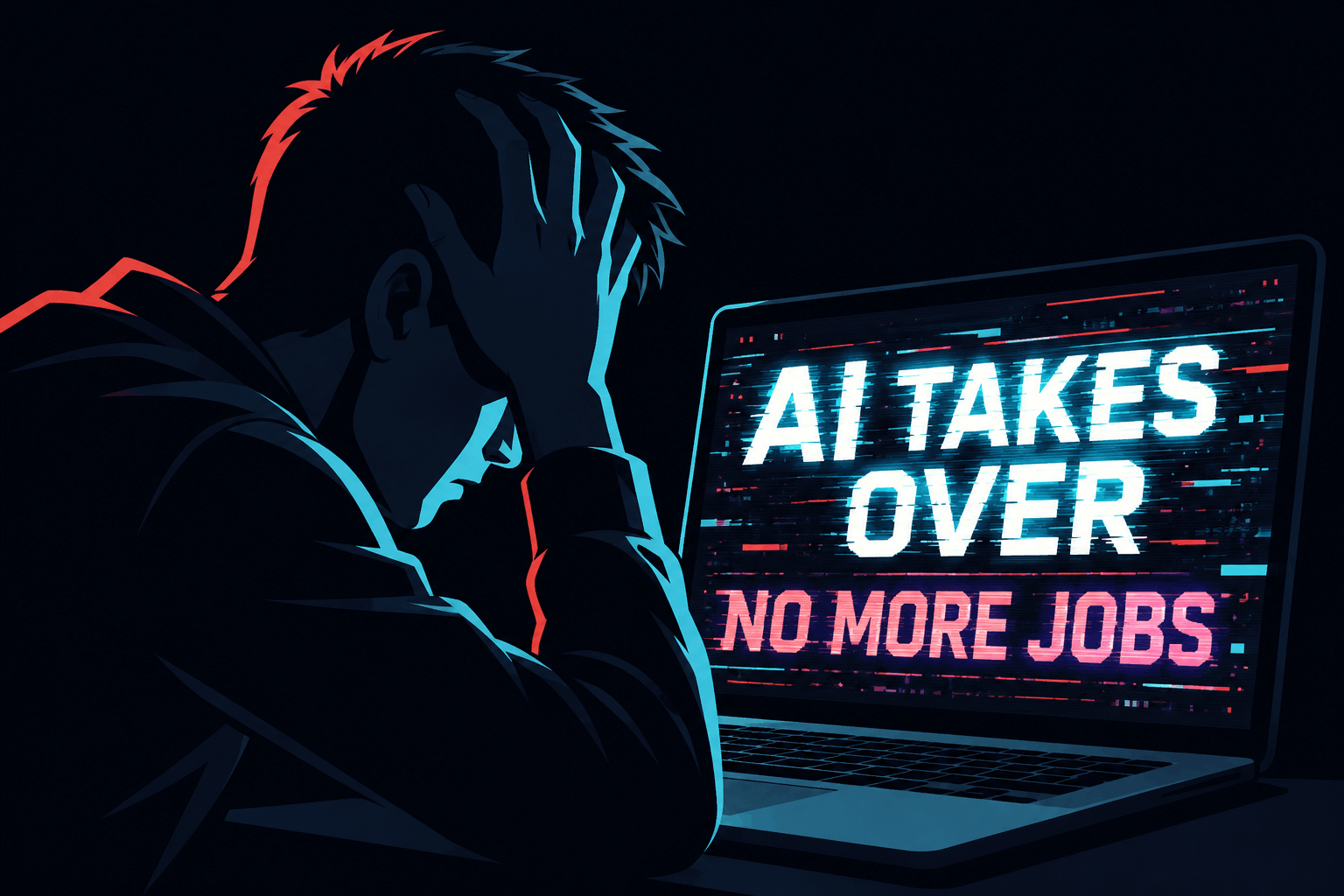
I was sitting at my desk, looking through YouTube videos and articles, trying to get the courage to learn how to code. Every single thumbnail seemed to scream the same thing: "Coding is dead." Viral creators and tech pundits were shouting that artificial intelligence had taken over, that nobody needed a website anymore, and that anyone could build a digital business with a single click using platforms like WordPress or Hostinger AI.
I fell straight into the trap. I spent an entire year paralyzed by that fear. I genuinely believed that if I invested my time into learning languages like JavaScript or Python, I would end up with a useless skill and a mountain of wasted hours.
But then I did something most people online forget to do. I shut my laptop, walked outside, and looked at the ground-level reality of my own neighborhood.
The Ground-Level Reality Check
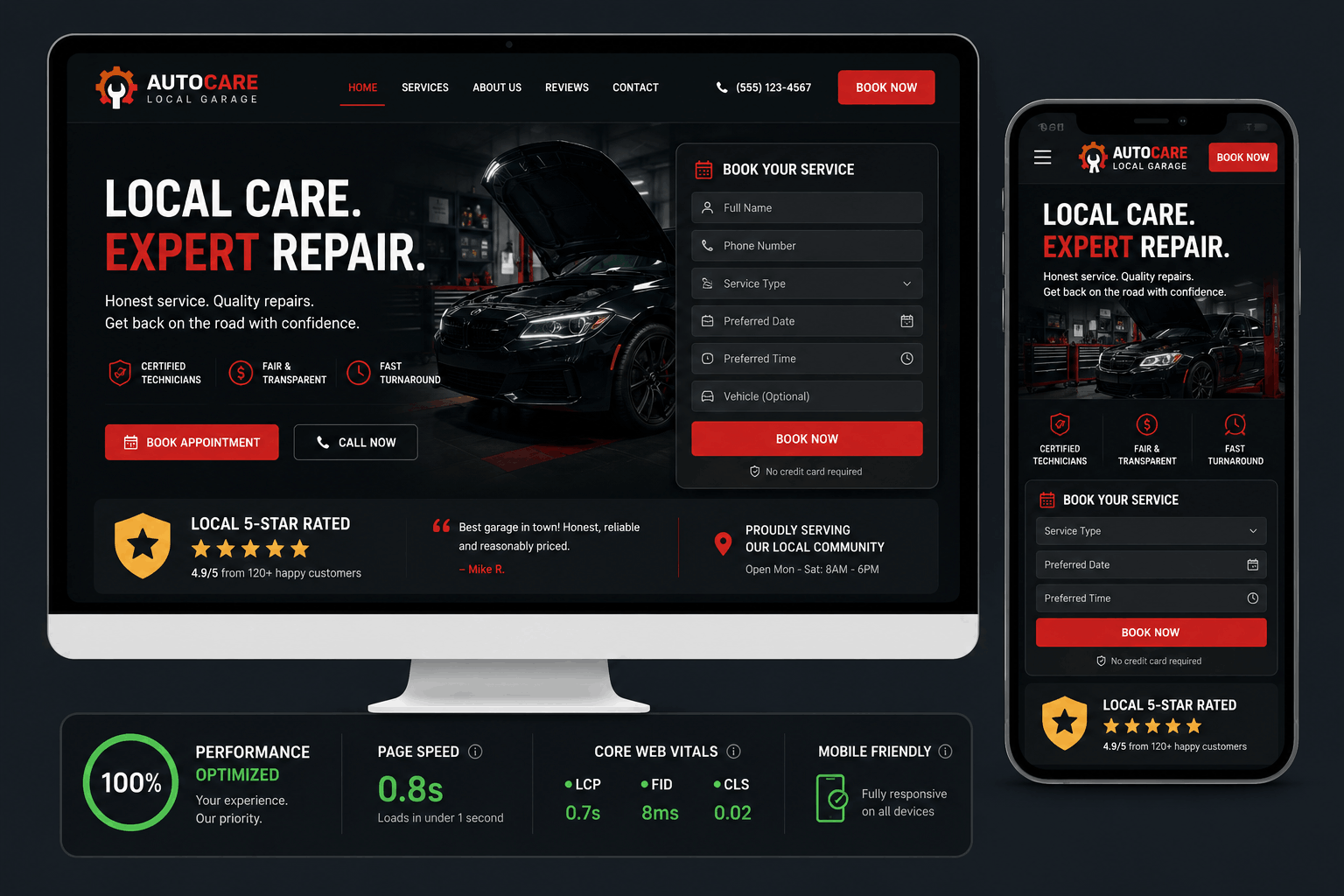
I started researching the businesses right around me. I looked at the local restaurants, the neighborhood gyms, the clothing boutiques, and the repair shops. The results were a massive wake-up call. Almost none of them had a functioning website.
At first, I assumed my area was just behind the times. So, I expanded my search to major cities. The actual numbers shocked me. Over 70% of the shops, hotels, and restaurants I looked up did not have a website at all.
Even worse, out of the 30% that actually had a web address, about half of them were terrible. They looked like they were built in the late 90s. They had broken links, missing images, and walls of unformatted, raw text.
That was the exact moment the online hype broke for me. If building a website is as simple as clicking a button or typing a prompt into an AI tool, why did the vast majority of real-world businesses still look like this?
The "One-Click" Illusion
To find out, I decided to try building a website for my own business. I didn't know how to code yet, so I went straight to WordPress. The internet told me it was easy.
The reality was completely different. It was an absolute nightmare. The moment I wanted to add custom logic or change how something worked under the hood, I hit a wall. I wrestled with plugins, struggled with templates, and felt completely stuck. After two weeks of pure frustration, I dropped the idea entirely.
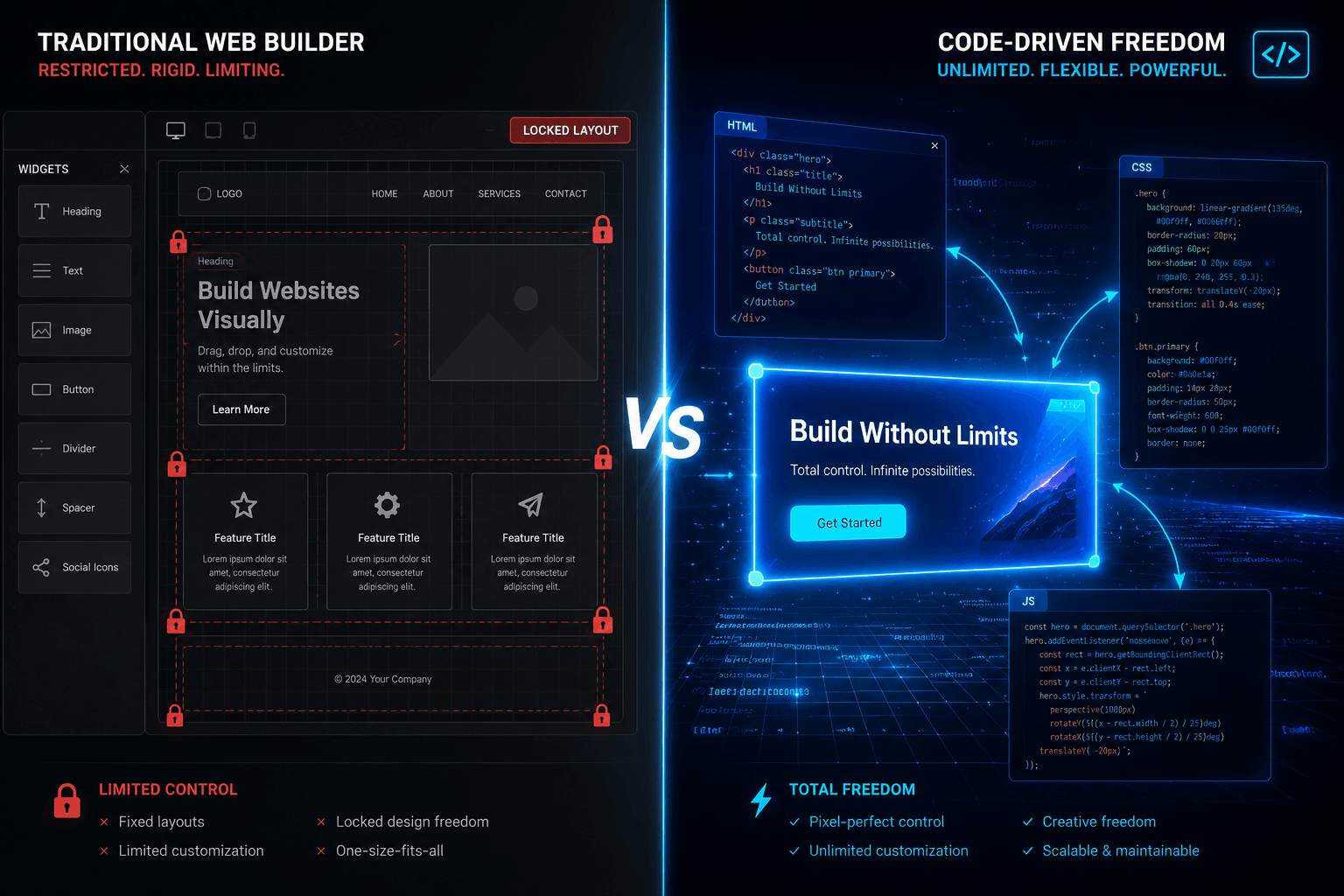
Next, I tried modern AI site builders and platforms like Lovable, which market themselves as one-click solutions for businesses. I thought this would fix my problems. Instead, it exposed how rigid these tools truly are.
Using them was incredibly time-consuming. I could not move elements around freely on the screen. If I wanted to change the appearance or function of a single button, the AI would frequently rewrite the entire component, breaking three other things in the process. You are completely trapped inside a pre-built box.
Real businesses do not want static, hardcoded templates that take hours of manual wrestling to tweak. They need software that adapts to their workflow, not the other way around.
The Trust Deficit and the "Vibecoder" Danger
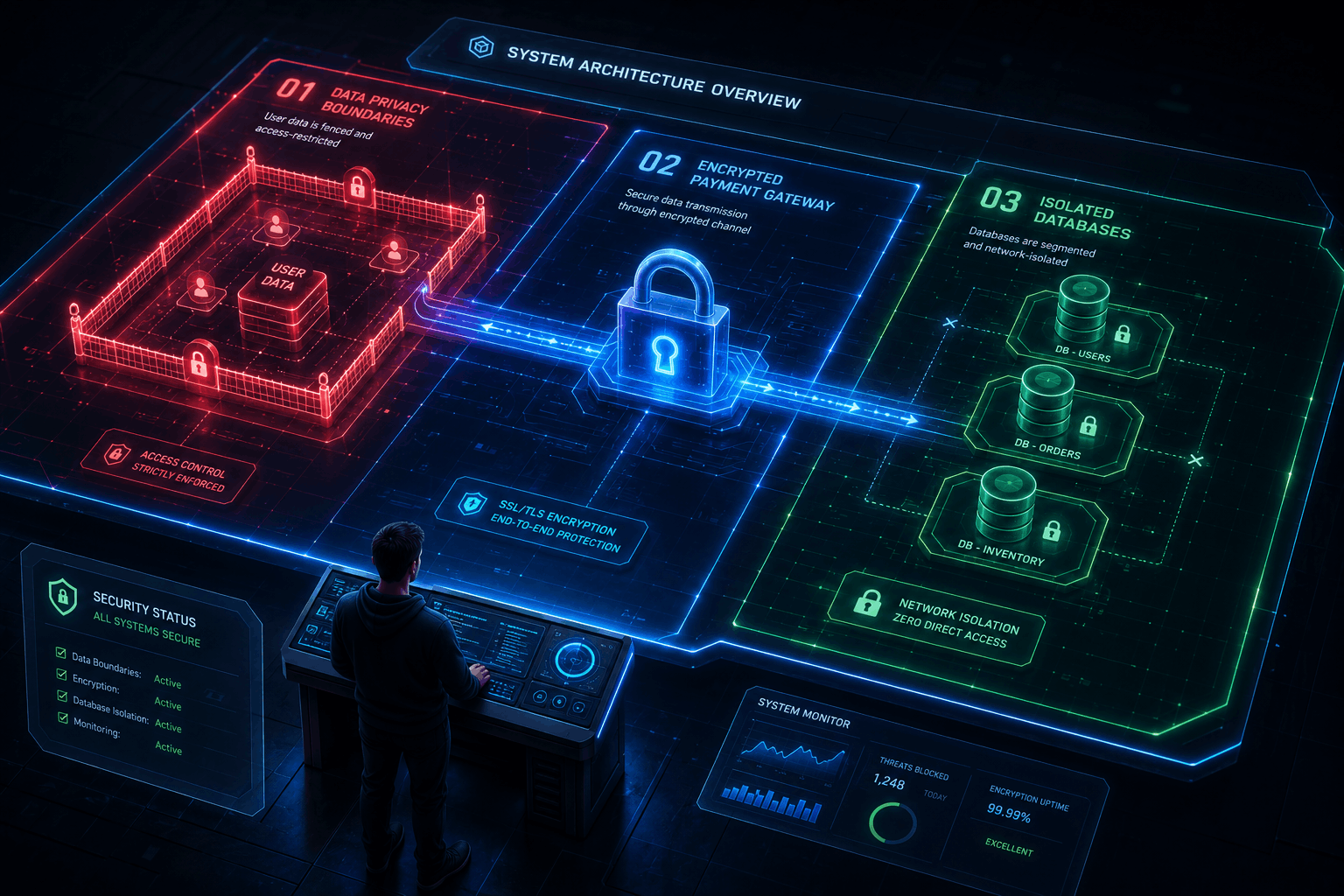
As a business owner, this experiment taught me a massive lesson about trust. Data is the most valuable asset any company owns. No serious business owner is going to hand over their confidential customer data, proprietary systems, or financial logic to a generic AI tool.
This brings us to a major risk in the industry today: the rise of the "vibecoder."
A vibecoder is someone who doesn't actually know how to code, read a database schema, or secure a server. They just type prompts into an AI tool, copy the output, and paste it into a project. They are riding the vibe of development without understanding the engineering.
To a business, a vibecoder is an absolute liability. Because they cannot read the underlying source code, they have no idea if the AI just introduced a massive security flaw. They could accidentally leak confidential user information, expose API keys, or build an architecture that collapses under the slightest bit of traffic.
Business owners love their property. They care deeply about security. They want an engineer who understands the foundation of the house, not someone who just asked a machine to paint the front door.
The 3-Year Verdict
After realizing that the hype was mostly smoke and mirrors, I made the choice to sit down and learn how to code. It was boring at first. It required patience, and it forced me to think logically through frustrating syntax errors.
It has been three years since I made that decision. Looking back, it was the best choice I could have made.
The job hasn't disappeared. The demand for real, custom software is higher than ever. But we do have to be completely honest about how the landscape has shifted.
A beginner who refuses to touch AI will struggle. A developer who only knows how to write basic HTML boilerplate will probably be replaced. The real winner is the developer who uses AI as a tool to accelerate their workflow, designs secure system architectures, and deeply understands code fundamentals.
You need to know what should be kept private and what can be shared with an external LLM. You need to know exactly what the AI is writing, and more importantly, you need to know when to make it stop.
The Survival Playbook for New Developers
If you are just starting your journey, ignore the noise on social media. People post clickbait because panic generates views. If you want to build a career that lasts, follow this blueprint.
1. The 6-Month AI Ban
When you start learning, put the AI tools away completely. Do not use copilots or prompting tools to write your code for the first six months.
If you let a machine solve every syntax error for you, your brain will never build the muscle memory required to debug. When you encounter a massive wall of red error text in your terminal, look at it. Read the lines. Figure out how to search for the solution yourself.
Once you understand why an error happens, you can start using AI later to translate those big red error blocks into quick summaries. But you must earn that shortcut first.
2. Build for Your Neighborhood
Stop building the same generic to-do apps and clone projects that everyone else has on their GitHub profile. Walk out of your house and talk to people.
Find a local gym, a family-owned restaurant, or a neighborhood mechanic. Look at their lack of a web presence, or offer to rebuild their broken, ancient site. Building a real project for a real person forces you to handle messy, real-world constraints. You will learn how to gather requirements, handle communication, and deploy something that people actually use.
3. Focus on High-Level Implementations
An AI can write a simple landing page text block in seconds. It struggles heavily with complex, interconnected backend systems.
Focus your learning on secure database design, complex third-party API configurations, and safe payment integrations like Stripe. Learn how to manage user state, protect endpoints, and handle server scaling. These are the senior-level skills that companies pay premium money for.
There is No Magic Button
The idea of a single-click, fully autonomous AI business run by someone who knows nothing about technology is a myth. No one can build a secure, scalable MVP (Minimum Viable Product) without understanding the core principles of coding, system design, and security.
AI is an incredibly powerful tool. It is a brilliant assistant that can save you hours of writing repetitive boilerplate code. But at the end of the day, it remains exactly that: a tool.
It cannot talk to a client to figure out what they actually want. It cannot take responsibility when a database leaks. And it cannot replicate the critical thinking of a human engineer who knows how to build things securely from scratch.
Stop letting the online panic keep you stuck in place. The reality on the ground is waiting for you to build something real.
My Question - What is one business in your local neighborhood right now that desperately needs a better digital presence? Answer In Comments